FEATURED
What Are GANs? Understanding Generative Adversarial NetworksWhat Are GANs? Understanding Generative Adversarial Networks
Generative adversarial networks, or GANs, are transforming the landscape of artificial intelligence. GANs are composed of two neural networks: a generator and a discriminator, which engage in a competitive process to produce realistic data. The significance of GANs in AI is substantial. They enhance capabilities across fields such as art, fashion, entertainment, and healthcare. In image generation, GANs are pivotal, creating photorealistic images. They also play a crucial role in medical imaging, enhancing X-ray resolution and aiding in the diagnosis of conditions like craniosynostosis. Experts anticipate that by 2026, GANs will drive 80% of generative AI interfaces. Gaining an understanding of GANs opens up vast potential for innovation in numerous industries.
Defining Generative Adversarial Networks (GANs)
What are Generative Adversarial Networks?
Basic definition and purpose
Generative adversarial networks, or GANs, represent a breakthrough in machine learning. GANs consist of two neural networks: a generator and a discriminator. The generator creates new data instances, while the discriminator evaluates them for authenticity. This process allows GANs to produce highly realistic data.
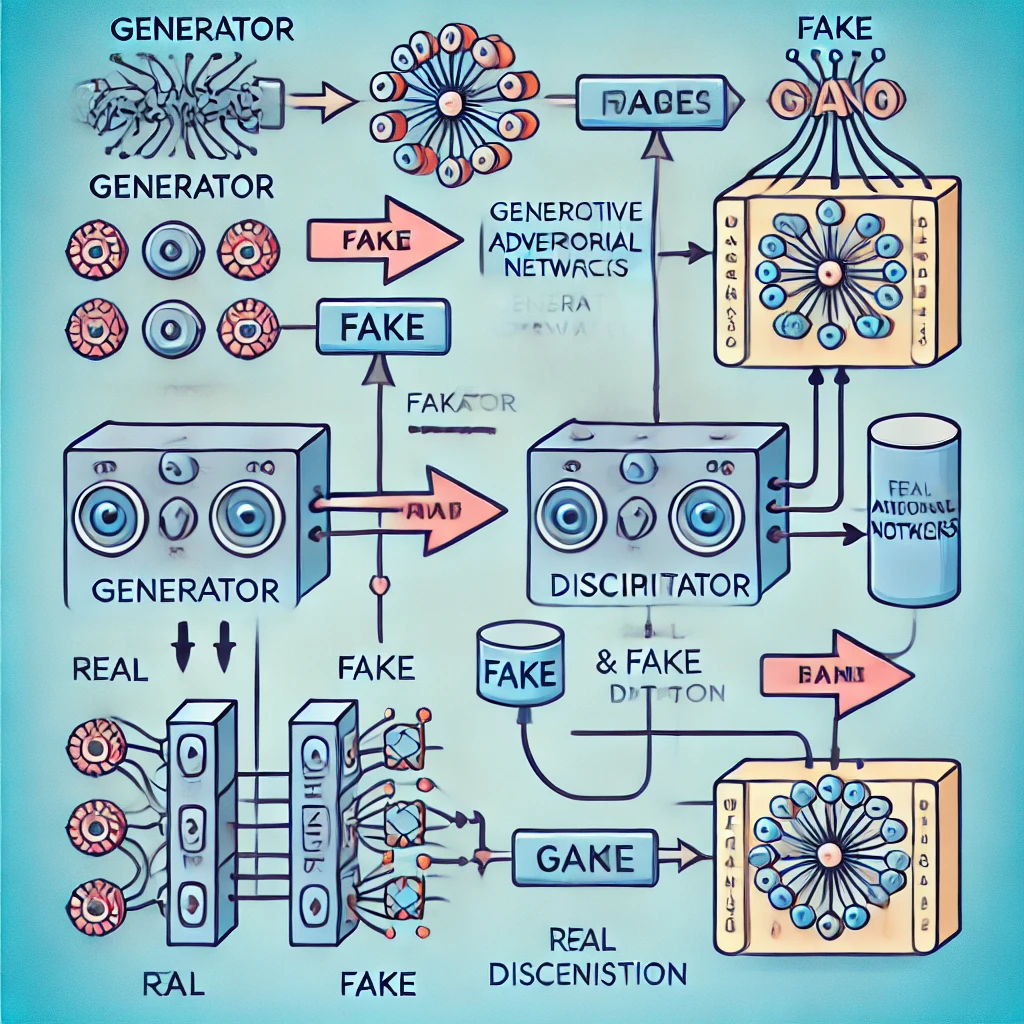
The purpose of GANs lies in their ability to generate synthetic data that mimics real-world data. This capability has transformed fields like image generation, video creation, and even music synthesis. GANs have become a cornerstone in developing generative AI applications.
Historical background and development
Ian Goodfellow introduced GANs in 2014, sparking significant interest in the AI community. Researchers quickly recognized the potential of GANs to generate realistic samples across various domains. Since then, GANs have evolved, giving rise to numerous architectures tailored for specific tasks.
These developments have expanded the use cases of GANs, including super-resolution, face aging, and background replacement. GANs continue to be an active research area, with ongoing advancements addressing challenges in training and deployment.
Key Components of GANs
Generator
The generator in GANs plays a crucial role. It produces fake data by learning patterns from the training dataset. The generator aims to create data indistinguishable from real data, constantly improving through feedback from the discriminator.
Discriminator
The discriminator acts as the evaluator. It distinguishes between real and fake data, providing feedback to the generator. This feedback loop helps the generator refine its outputs, striving for authenticity.
How they interact
The interaction between the generator and discriminator forms the core of GANs. The generator attempts to fool the discriminator by producing convincing data. The discriminator, in turn, becomes more adept at identifying fakes. This adversarial process drives both components to enhance their performance, resulting in realistic data generation.
How GANs Work
The Adversarial Process
Training process
Generative adversarial networks, or GANs, operate through a unique adversarial training process. The generator creates synthetic data, while the discriminator evaluates its authenticity. The generator aims to produce data that can deceive the discriminator. The discriminator, on the other hand, strives to accurately distinguish between real and fake data. This competition drives both networks to improve continuously.
Training GANs involves iterative updates. The generator learns from the discriminator's feedback. The discriminator refines its ability to identify fake data. This back-and-forth process enhances the quality of the generated data. Researchers have developed techniques to stabilize this training process. These include adjustments in network architecture and optimization strategies.
Loss functions
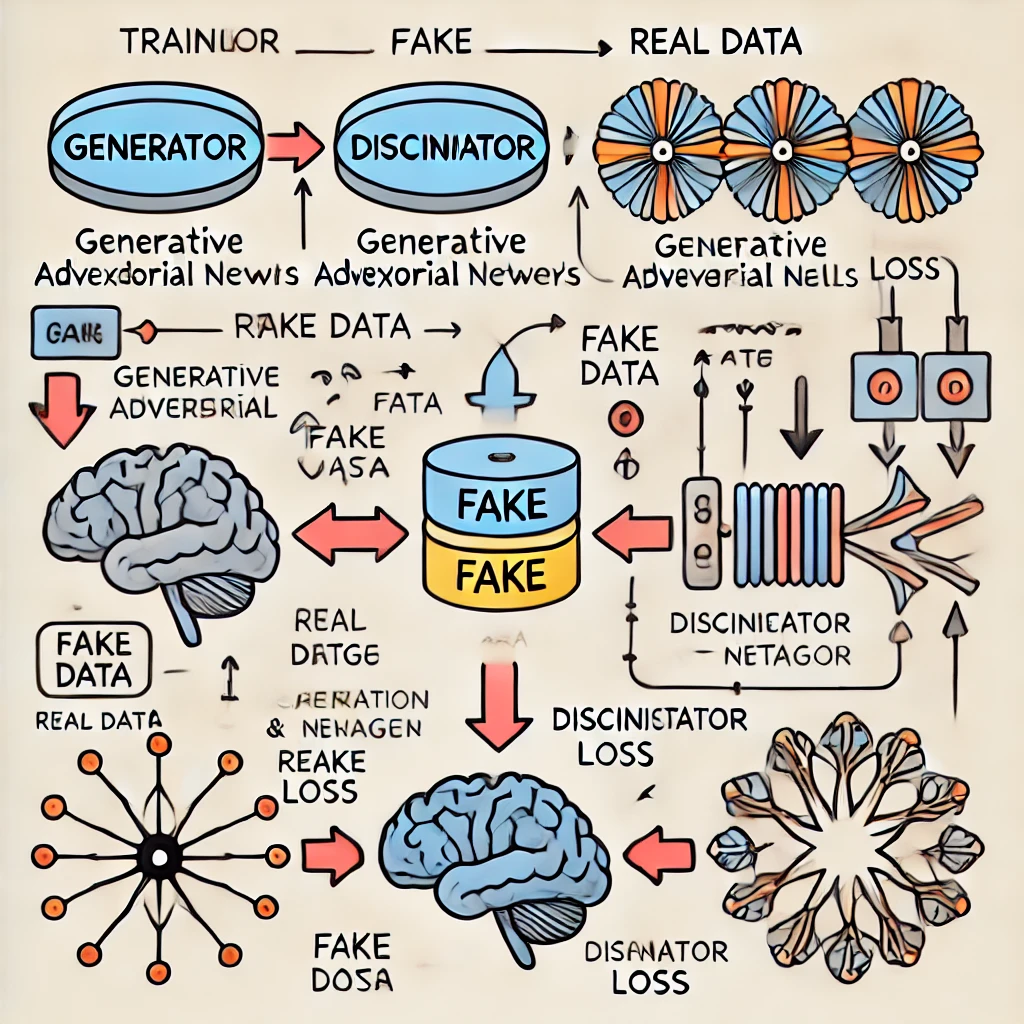
Loss functions play a critical role in the training of GANs. The generator's loss function measures how well it fools the discriminator. The discriminator's loss function assesses its accuracy in distinguishing real from fake data. A balance between these loss functions ensures effective training.
The choice of loss function impacts td'f'khe stability and performance of GANs. Some researchers use the Wasserstein loss function to address instability issues. This approach helps mitigate the vanishing gradient problem, which can hinder training progress. Proper selection and tuning of loss functions are essential for successful GAN implementation.
Challenges in Training GANs
Mode collapse
Mode collapse presents a significant challenge in training GANs. This issue occurs when the generator produces limited diversity in its outputs. The generator may focus on a narrow set of data patterns, neglecting others. Mode collapse reduces the effectiveness of GANs in generating varied and realistic data.
Researchers have proposed solutions to combat mode collapse. Techniques such as minibatch discrimination and feature matching encourage diversity. These methods promote the generation of a broader range of data instances. Addressing mode collapse is crucial for maximizing the potential of GANs
Convergence issues
Convergence issues also pose challenges in GAN training. The dynamic nature of the adversarial process can lead to instability. The generator and discriminator may not reach a stable equilibrium. This instability affects the quality of the generated data.
Factors contributing to convergence issues include network initialization and data quality. Large-scale training requires diverse and representative datasets. Researchers continue to explore modified architectures and training strategies. These efforts aim to improve convergence and enhance GAN performance.
Applications of GANs
Generative adversarial networks, or GANs, have revolutionized various industries by enabling the creation of realistic data. The applications of GANs span across multiple domains, showcasing their versatility and transformative potential.
Image Generation
Deepfakes
Deepfakes represent one of the most controversial applications of GANs. These AI-generated videos or images depict individuals saying or doing things they never did. GANs enable the creation of highly convincing deepfakes by learning from vast datasets of real images and videos. This technology raises ethical concerns, but it also holds potential for positive uses in entertainment and media.
Art and Design
In the realm of art and design, GANs have opened new avenues for creativity. Artists use GANs to generate unique artworks by training models on existing art styles. Designers employ GANs to create fashion designs that push the boundaries of traditional aesthetics. The ability of GANs to produce novel and inspiring visuals has made them a valuable tool in creative industries.
Data Augmentation
Enhancing Datasets
Data augmentation involves expanding datasets by generating synthetic data. GANs play a crucial role in this process by creating realistic data samples that enhance the diversity of training datasets. This augmentation improves the performance of machine learning models by providing them with more varied data to learn from. GANs help overcome limitations posed by small or imbalanced datasets.
Use in Machine Learning Models
Machine learning models benefit significantly from the data generated by GANs. Enhanced datasets lead to improved model accuracy and robustness. GANs enable the creation of training data that is representative of real-world scenarios, thereby increasing the reliability of machine learning applications. This capability is especially valuable in fields like healthcare, where accurate predictions are critical.
Other Use Cases
Text-to-Image Synthesis
GANs facilitate the translation of text descriptions into images. This application finds use in various sectors, including e-commerce and advertising. Businesses leverage text-to-image synthesis to create visual content based on textual inputs, enhancing customer engagement. GANs enable the generation of images that accurately reflect the described attributes, providing a powerful tool for marketing and communication.
Music Generation
The music industry has also embraced GANs for creative purposes. GANs generate music by learning patterns from existing compositions. Musicians and producers use GANs to explore new musical styles and compositions. The ability of GANs to produce original music pieces adds a new dimension to the creative process, offering endless possibilities for innovation in music production.
Generative adversarial networks, or GANs, have revolutionized the field of artificial intelligence. GANs offer immense potential for innovation across various industries. The future of GANs promises exciting developments. Ethical considerations and responsible deployment remain crucial. Addressing biases and ensuring fairness in GAN-generated content are essential steps. Exploring GANs further can unlock new possibilities in AI technology. GANs will continue to advance AI creativity, merging human ingenuity with machine capabilities.
Previous article
MyShell x Hyperbolic | A Match Made in AINext article
Turn Yourself to the Game World