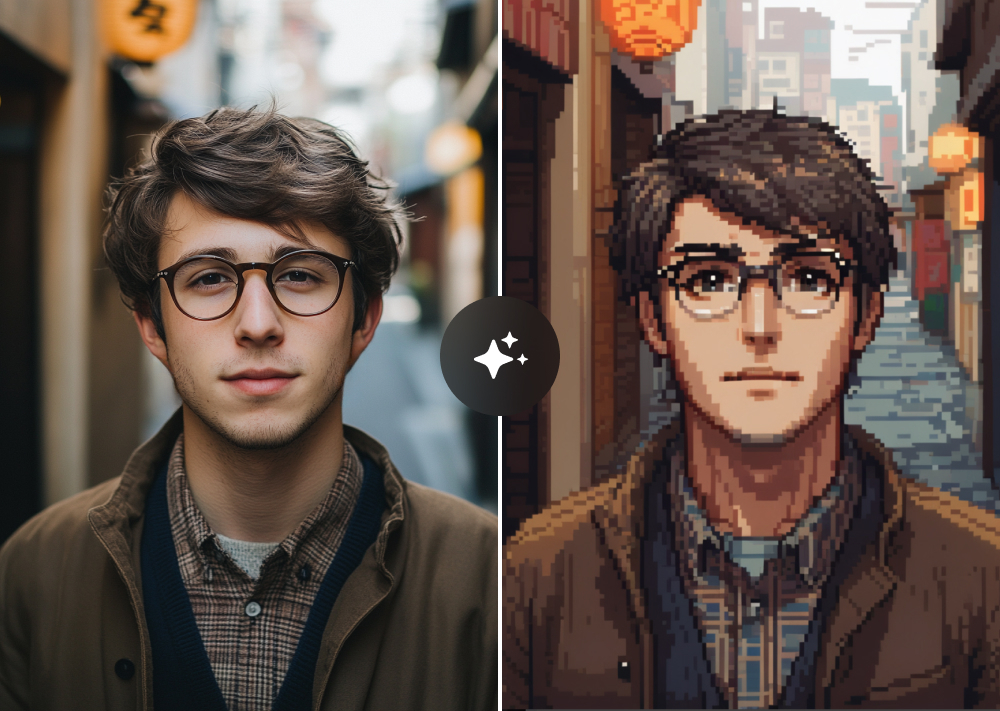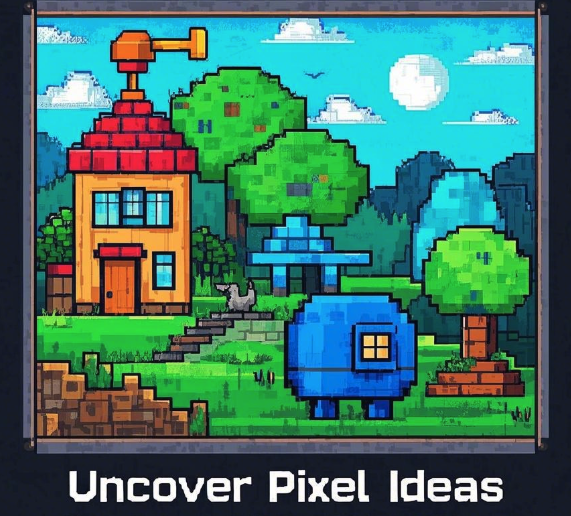
Try it now!
Pixel Art Ideas: Tools, Basics, Themes and Inspirations UnveiledExploring Pixel Art: A Creative Journey from Novice to Expert
In the ever-changing world of digital art, pixel art exudes an irresistible charm with its unique blend of retro and modern elements. Remember the excitement when you first laid eyes on those 8-bit characters in classic games like Super Mario? That's the magic of pixel art. It has spanned generations and deeply captivated creators and enthusiasts alike. If you've ever been drawn to the wonderful world of pixel art or are eager to embark on your creative journey in this field, this article will bring you endless surprises. Let's explore those exciting pixel art ideas together and ignite the spark of creativity within you!
Tools of the Trade: Your Pixel Art Arsenal
Before embarking on the fascinating journey of pixel painting, choosing the right tools is of utmost importance. For beginners new to pixel art, Aseprite is an excellent starting point. Its user-friendly interface makes it easy for novices to get started and reduces the learning curve. With a wide variety of brushes at your disposal, you can freely experiment with different textures and styles. Whether you're creating cute characters or constructing grand scenes, Aseprite's powerful animation capabilities can add a unique dynamic charm to your works, bringing static pixel paintings to life.
If you prefer a more concise and efficient tool, Pyxel Edit is definitely worth considering. It focuses on simplicity and speed, making it ideal for quickly sketching out your pixel art concepts when inspiration strikes. Although its functions are simple, it doesn't compromise on key features. The carefully designed set of functions ensures that you won't be overwhelmed by complex options when creating stunning pixel art works.
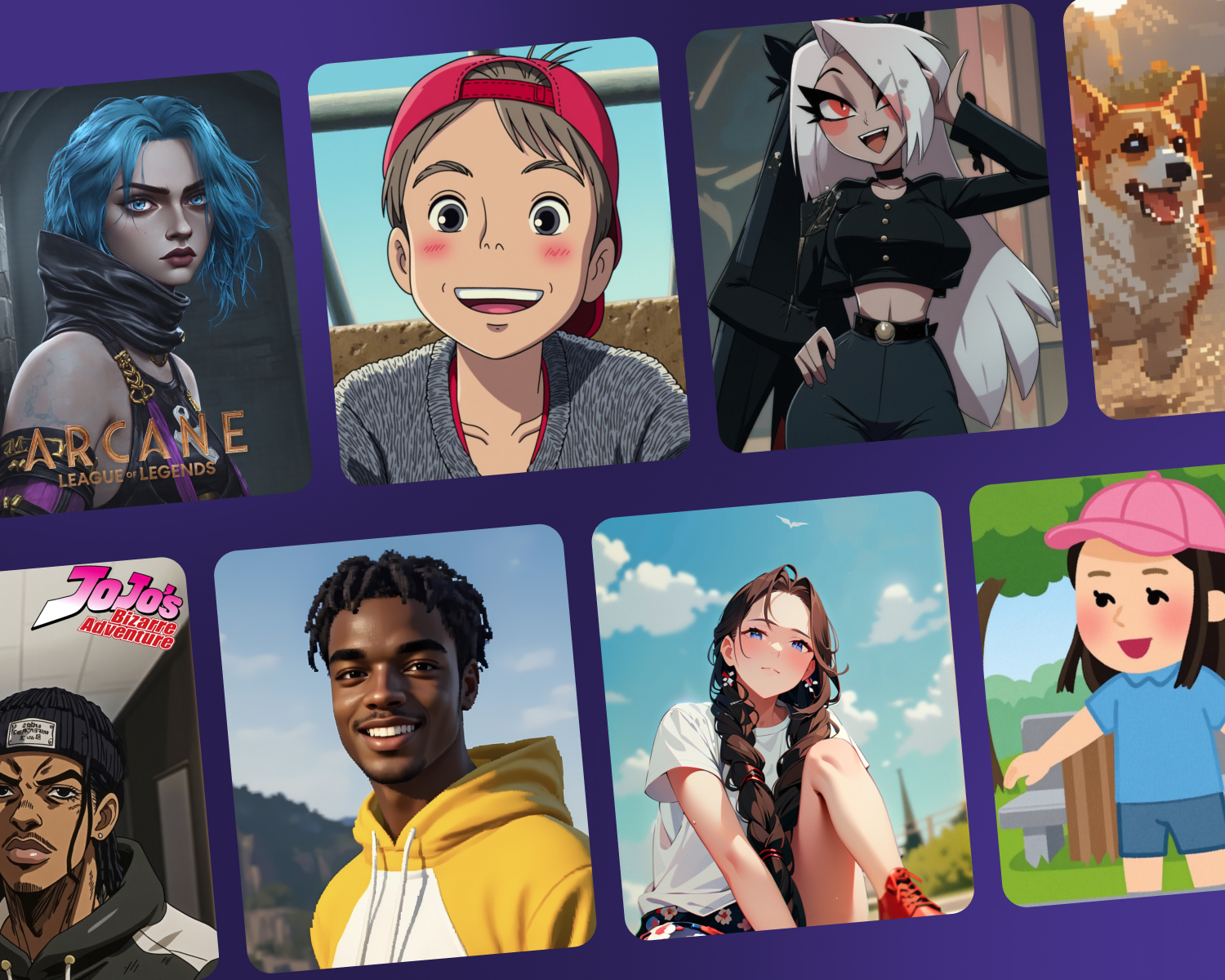
There's also a must - try treasure tool - Pixel GO, the image-generation tool of MyShell AI. It harnesses powerful AI technology to make pixel art creation more enjoyable and effortless. Just input your creative descriptions, and Pixel GO can quickly generate unique pixel - style works. Even if you have no prior painting foundation, you can easily realize your creativity through it and experience the joy of pixel art creation. Whether you want to create cute cartoon characters or science - fiction - themed future scenes, Pixel GO can be your great assistant.
Mastering the Basics: The Cornerstones of Pixel Art
Once you've prepared your tools, it's time to delve into the fundamental elements of pixel art. First and foremost, understanding the grid is crucial. The grid is like the skeleton of the pixel art canvas, with each small square representing a pixel. By skillfully arranging and coloring these pixels, you can transform the ideas in your mind into astonishing visual works.
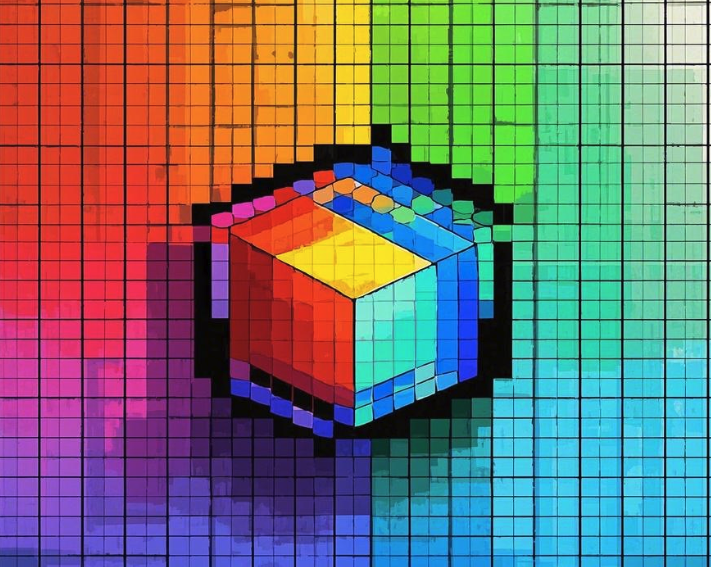
When it comes to color selection, starting with a limited color palette often yields unexpected results. A few carefully chosen colors can create a harmonious and highly appealing composition. Experiment with different color depths. A lower color depth can evoke a classic retro style, reminiscent of the good old days of early video games. In contrast, a higher color depth can present more details and a more realistic effect, allowing you to precisely capture the subtle nuances of your subject.
Another important technique is choosing the right brush size. A small brush is suitable for adding delicate details, such as the twinkle in a character's eye or the fine texture of tree bark. These details can make your work come alive. On the contrary, a large brush can quickly outline the basic shapes and determine the overall structure of your work. When practicing, you can start by drawing simple geometric shapes like squares, circles, and triangles. Once you've mastered these, try drawing basic objects such as cubes, spheres, or cylinders. These exercises will help you intuitively understand how pixels combine to form various recognizable shapes.
Endless Themes: Transforming Ideas into Pixel Masterpieces
Pixelating Everyday Objects
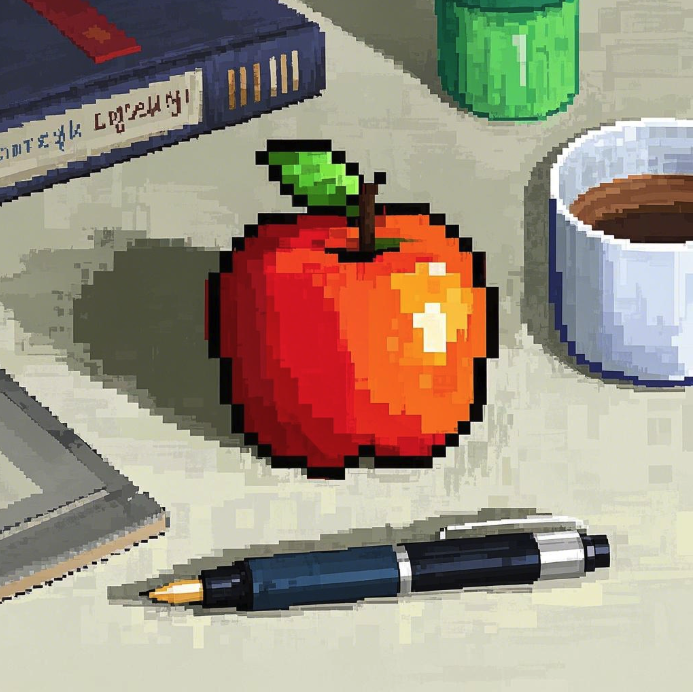
One of the most fascinating aspects of pixel art is its ability to transform ordinary everyday objects into extraordinary ones. Look around you. The apple on the dining table, for example, can be an excellent subject for pixel art. First, carefully observe its shape, noticing the smooth curves and the small indentation at the top where the stem is attached. Then, simplify these details into pixels. Use a combination of red, green, and yellow pixels to represent the natural color of the apple, and add some darker pixels to create shadows, giving it a three - dimensional appearance and making it look more realistic. You can also try pixelating other everyday objects, such as your beloved pen, a frequently read book, or a coffee cup. The world around you is full of potential pixel art materials waiting to be discovered.
Character Creation: Breathing Life into Pixels
Characters are often the focal point of pixel art works. Whether you're creating a heroic figure, a cute animal, or a mysterious fantasy creature, the key lies in highlighting the unique characteristics of the character. For human characters, body proportions play a vital role. A shorter and more robust build can convey strength and tenacity, while a taller and slender figure may imply elegance and grace.
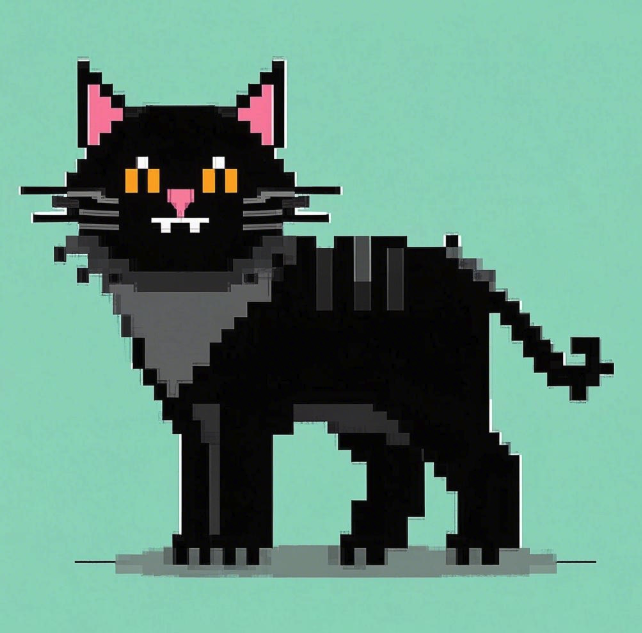
When it comes to depicting facial features, a few carefully placed pixels can make a world of difference. A simple upward - curving line can instantly convey a smile, while a downward - curving line can express sadness. Experiment with different eye shapes, nose sizes, and hairstyles to endow the character with a distinct personality. For animal characters, closely study their real - life counterparts. Use soft - colored pixels to represent the fluffy fur of a cat, and bold, black pixels to depict the sharp claws of a tiger.
Building Enchanting Scenes
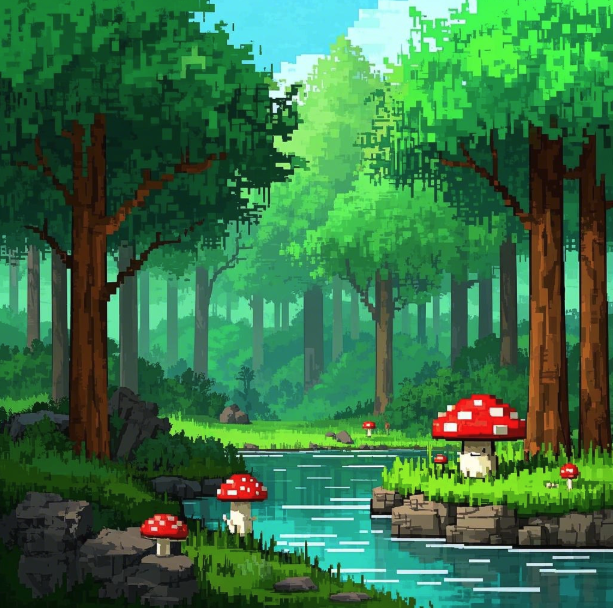
Creating a pixel art scene is like constructing a small, independent world. Suppose you want to create a forest scene. First, establish the background. Use a gradient of green pixels to represent the foliage in the distance, gradually increasing the saturation and depth as you move towards the foreground. This gradient effect can create a sense of depth and distance. Then, add some trees. Draw the trunks with rich, brown pixels and the leaves with a variety of green shades to mimic the natural variation in a real - life forest. You can also add some lovely small details, such as mushrooms on the forest floor. Use red and white pixels to make them stand out and add a touch of fantasy to the scene.
Pay special attention to the depth of the scene. Place some elements in the foreground, such as a meandering stream or a weather-beaten rock, to create a sense of three-dimensionality. Use lighter colors for objects in the distance and darker colors for those in the foreground. This simple color-based technique can make your scene more realistic and immersive, making the viewer feel as if they've stepped into a pixelated fairy-tale world.
Drawing Inspiration: Learning from the Masters and Beyond
Analyzing Iconic Game Pixel Art
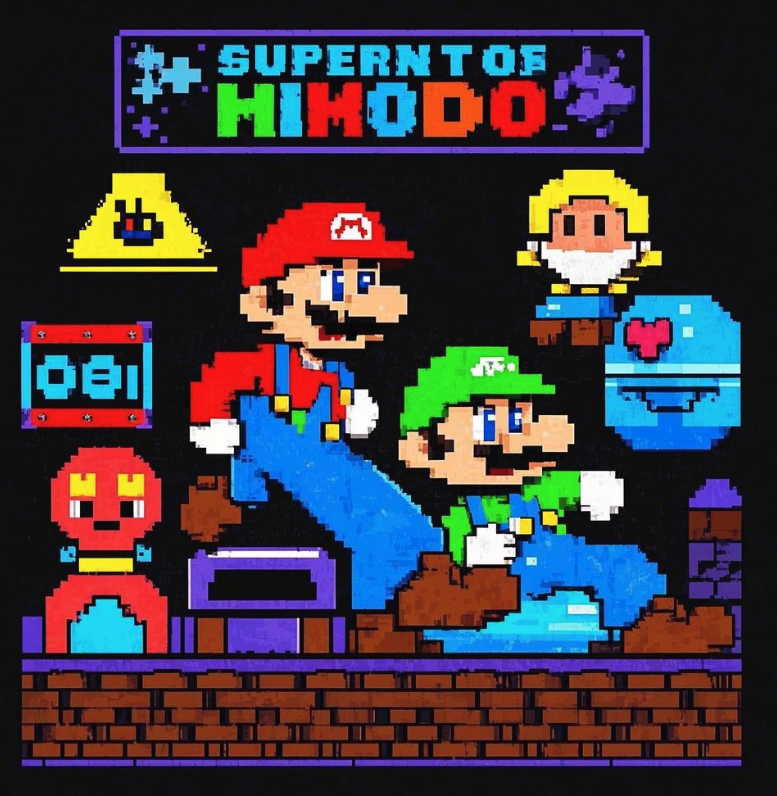
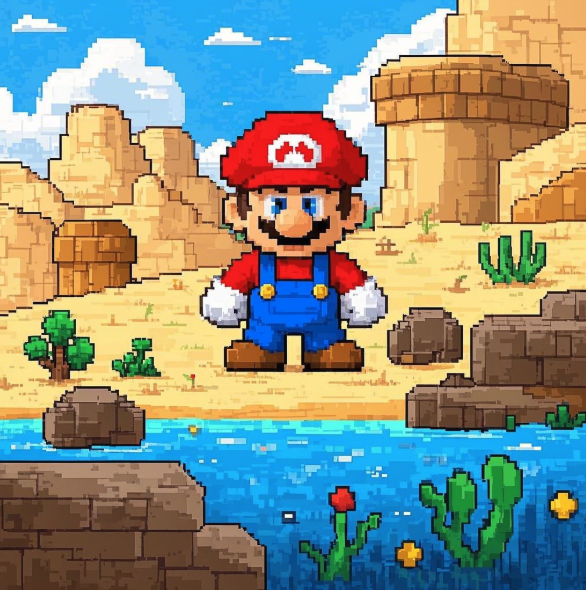
The world of video games is a treasure trove of pixel art inspiration. Take the classic Super Mario games as an example. The character of Mario perfectly illustrates how the simplicity of pixel art can create an eternal classic image. His iconic red hat, blue overalls, and bright smile are instantly recognizable worldwide. The levels in the game, from the serene Mushroom Kingdom to the perilous Bowser's Castle, are all meticulously crafted with pixels. Notice how different environments are distinguished by unique color palettes and pixel patterns. In the desert levels, a large number of sandy - colored pixels create a sense of arid vastness. In contrast, the underwater levels are dominated by blue and green, presenting a cool and mysterious atmosphere. Analyzing the pixel art of these classic games can provide you with valuable insights into color theory, character design, and environmental storytelling.
Showcasing Contemporary Pixel Artists' Works
In the modern art field, there are many talented pixel artists constantly pushing the boundaries of pixel art. Take Kris Kowal for example. He is well - known for his hyper - realistic pixel portraits. Using a combination of tiny pixels and a wide color palette, he manages to capture the most intricate details of human faces, from the texture of the skin to the sparkle in the eyes. His works are not only pixel - perfect but also full of life and emotion.
Another remarkable artist is Jacob Ganter. He specializes in creating fantastical pixel art worlds filled with magical creatures and otherworldly landscapes. His works are a testament to the limitless creativity within pixel art. The vivid colors, unique perspectives, and imaginative elements in his pieces draw viewers into a world beyond imagination. Learning from their techniques and styles can broaden your creative horizons and help you find new ways to express your unique artistic ideas with pixels.
Cross-Pollination: Drawing Inspiration from Other Art Forms
Pixel art doesn't exist in isolation; it can draw inspiration from a wide range of other art forms. From traditional paintings, you can learn about color harmony and composition techniques. For instance, the use of light and color by impressionist painters can be translated into pixel art. By arranging different - colored pixels to create the illusion of light and shadow, you can achieve a similar sense of depth and realism.
Photography is also an important source of inspiration. The techniques of photographers in capturing moments, the use of light and shadow, and the composition of the subject within the frame can all be applied to pixel art creation. You can take a stunning sunset photo and then try to recreate it with pixels, focusing on the warm colors of the sky and the silhouette of the landscape against the setting sun.
Anime and manga, with their unique character designs and dynamic storytelling styles, can inspire you to create more expressive and energetic pixel art characters. The bold lines and vivid colors commonly found in anime can be incorporated into pixel art, making your characters more vivid and eye-catching.
Previous article
Valentine's Filters: Add Romance to Your Photos with AI Magic